
A Complete Guide on Handbag Materials
A handbag’s impact is undeniable. Sometimes it’s small, sometimes large; sometimes it sits in our hands, sometimes it completes our look from our shoulder. Whatever the day or occasion, you need one wherever you go.
We all know how important this little accessory is and how exciting it is to shop for one.
But what’s the real foundation of a good handbag? Design and color matter, but the detail that truly determines a bag’s quality is what it’s made from. The material is like the concrete of a building: nothing can be built without the right one.
In other words, understanding the material is understanding the bag itself. It shapes the bag’s purpose, why certain styles work as shoulder bags, and why some materials make a poor choice for crossbody bags for women.
In this guide, we’ll explore the most common handbag materials from luxurious genuine leather to lightweight canvas, modern vegan leather, and seasonal straw along with their pros, cons, and how to choose the right one for your needs and occasion.
Why Handbag Material Matters
A handbag’s material significantly impacts its durability and lifespan while also influencing its aesthetic appeal and your personal style.
For example, a handbag ladies often communicates sophistication and timeless elegance, while canvas or fabric bags lean toward a more casual, relaxed look. Even the same design can feel completely different depending on the material used.
Comfort and practicality also play a role. Lightweight materials like nylon or canvas are easier to carry throughout the day, while structured leather bags may feel heavier but offer a more polished shape and better organization.
Maintenance and care requirements also play an important role.
Price differences between materials are often due to the manufacturing process, the origin of the material, and the level of care required.
Taking care of your handbag is not just an option, it is part of maintaining your style. Knowing what a handbag is made from helps you care for it more effectively and extend its lifespan.
The Most Common Handbag Materials Explained
Genuine Leather
Genuine leather is one of the most widely used animal-based materials for handbags, known for its durability, natural look, and practical everyday appeal. Although it may develop less patina than premium leather grades, it still offers a refined appearance and enough strength for regular use. If you want to better understand the difference between leather types and finishes, our complete leather buying guide can help you choose the right material with more confidence.
Because genuine leather is a long-lasting material, it also requires proper care to maintain its texture and appearance. Regular conditioning with a suitable leather conditioner can help keep it soft, polished, and protected, while prolonged exposure to direct sunlight should be avoided to prevent dryness or surface damage.
Genuine leather is a suitable option for everyday handbags, work bags, travel bags, weekend bags, wallets, and card holders. However, since it can feel heavier than some other materials, it is better to choose crossbody styles carefully and make sure the bag feels comfortable on your shoulders during daily use.
Exotic Materials
These handbags are rare and represent a statement. A statement that some people disagree with from a moral perspective.
These materials are typically used in premium collections due to their exceptional durability, refined appearance, and artisanal processing techniques. Each piece carries a one-of-a-kind pattern, making every handbag truly unique and impossible to replicate.
Because of their scarcity and the complex sourcing and production processes involved, handbags made from exotic leathers come at a significantly higher price than those made from standard materials. This positions them firmly within the luxury segment, often associated with couture fashion houses and statement accessory collections.
Vegan Leather (PU / Faux Leather)
Even though real leather is one of the most recommended materials, it does have its disadvantages. It is undoubtedly a very durable and long-lasting material, but it is also heavy and can create discomfort during long-term use, especially when it comes to handbags for women. Its ethical implications are also questioned, as its production involves the use of animal hides.
It makes sense to say that vegan leather is no longer perceived the way it used to be. Today, it has gained popularity among many luxury brands. Thanks to its cruelty-free manufacturing process, it has become a popular ethical alternative to genuine leather. No animals are harmed during its production, and it is also affordable and stylish.
If you are concerned about its finish and appearance, modern vegan leather can closely mimic the look and feel of genuine leather. The improved quality of today’s materials and manufacturing techniques can be very impressive.
However, we are not saying that vegan leather is just as durable as genuine leather. While it is true that it is generally less durable, it remains an excellent choice for handbags and crossbody bags for women.
A faux leather handbag is a great option for everyday accessories such as handbags, gloves, and leather belts. Its soft and lightweight construction makes it perfect for work and office bags, formal handbags, meeting purses, and stylish crossbody bags.
Canvas
Let’s face it—leather is not for everyone. It looks great with most outfits, but sometimes it is simply not the perfect option. Canvas sits on the opposite end of the handbag material spectrum. It has a softer appearance and gives off a more relaxed, vibrant, city-inspired vibe.
Not every canvas bag is the same. Some are made from cotton, while others are made from linen. Contrary to what many people assume, certain canvas materials are water-resistant and provide excellent protection for your belongings.
Canvas bags generally have a softer, more relaxed structure, making them an excellent choice for casual and street-style outfits.
Their lightweight construction and casual appearance make them ideal for everyday use and travel, and they are also easy to clean.
If you are looking for a less formal appearance and a more relaxed handbag that pairs well with casual clothing, canvas is the right material for you.
Canvas tote bags and shopper bags are among the most popular canvas shoulder bags available. They come in vibrant, versatile colors and feature a wide variety of attractive patterns.
A canvas shopper or tote bag looks its best with spring and summer outfits for travel, shopping, everyday errands, and casual meetups with friends, perfectly complementing a feminine, street-style wardrobe.
Nylon
It is often said that nylon is a low-quality material associated with cheap handbags that lose their shape after only a few months. However, that is not entirely true.
Although nylon can be sensitive to heat and vulnerable to punctures, it is also extremely lightweight, practical, water-resistant, and durable. Its smooth finish makes it easy to clean, and it can also be recycled many times.
Once associated mainly with sporty or casual styles, today’s nylon bags range from minimalist totes to sophisticated shoulder bags and crossbody styles, making them suitable for work, travel, and everyday use.
Nylon backpacks and travel bags have long been favorites, while nylon tote bags and crossbody styles are also gaining popularity among luxury brands.
Their lightweight feel, easy maintenance, and resistance to daily wear make them ideal for busy lifestyles. Whether you need a spacious tote for work, a compact crossbody for travel, or an everyday shoulder bag, a well-made nylon handbag delivers dependable performance without sacrificing style.
However, nylon is best suited for spring and summer use. It can melt, warp, or become damaged when exposed to high temperatures, such as direct contact with heaters, irons, or the hot interior of a car for extended periods.
Suede
Technically, suede is a type of leather, but its popularity has earned it a separate category in this guide.
Suede is created from the inner layer of animal hides, most commonly lamb, goat, calf, or deer. Unlike full-grain leather, which uses the outer surface of the hide, suede is buffed to produce a soft, napped texture with an elegant finish.
The lining is one of the most important features of a suede handbag. It defines the bag and significantly impacts its overall quality. A suede handbag with a high-quality lining offers a combination of luxury and versatility that appeals to fashion-conscious shoppers.
Its classic high-fashion appearance makes suede soft and comfortable while giving it a refined, matte finish.
Because suede is sensitive to moisture and stains, be sure to brush the surface regularly with a suede brush to remove dust, restore the nap, and extend its lifespan.
A suede handbag or shoulder bag is an excellent choice for fall and winter outfits, formal occasions, and whenever you want an accessory that pairs beautifully with a fur coat, office attire, or your favorite cardigan.
Synthetic or Straw
While both are often considered seasonal materials, they offer lightweight construction, affordability, and a wide variety of styles.
Synthetic handbags are valued for their versatility and low maintenance, while straw handbags are appreciated for their natural texture and relaxed, seasonal appeal. Both materials are excellent choices for casual wear, vacations, and warm-weather outfits.
Most synthetic handbags can be cleaned with a damp cloth and require very little maintenance. Straw handbags, on the other hand, require a bit more care. Dusting your straw bag regularly with a soft brush or a dry microfiber cloth is recommended. For light stains, wipe the affected area gently with a slightly damp cloth and a small amount of mild soap.
Synthetic handbags are ideal for everyday use, commuting, and fashion-forward styles at an affordable price. Straw handbags are best suited for beach vacations, summer outings, picnics, resort wear, and other warm-weather occasions where their natural texture enhances a relaxed and effortless look.
How to Choose the Right Handbag Material
By now, we know the basics: what each material is known for, how to maintain it, and which types of handbags each material is best suited for. The right material should be chosen based on your daily routine, what you expect from its functionality, and, finally, the outfit you plan to pair it with. Different occasions call for different handbag materials. Choosing a material that complements your lifestyle ensures your bag remains both functional and stylish.Pay attention to what you need from your handbag. Colors, design, and features such as hardware may vary, but the relationship between the material and its function is the key factor.
For example:
For everyday use → Canvas, nylon, and vegan leather are among the best options. They are lightweight, durable, and pair well with casual outfits.
For work and formal settings → Leather and structured faux leather create a polished, elegant, and professional look.
For travel → Nylon and lightweight leather offer a sporty yet sophisticated appearance while remaining easy to clean during your travels.
For luxury occasions → Leather, suede, and exotic materials provide a premium look and are often considered long-term investment pieces.
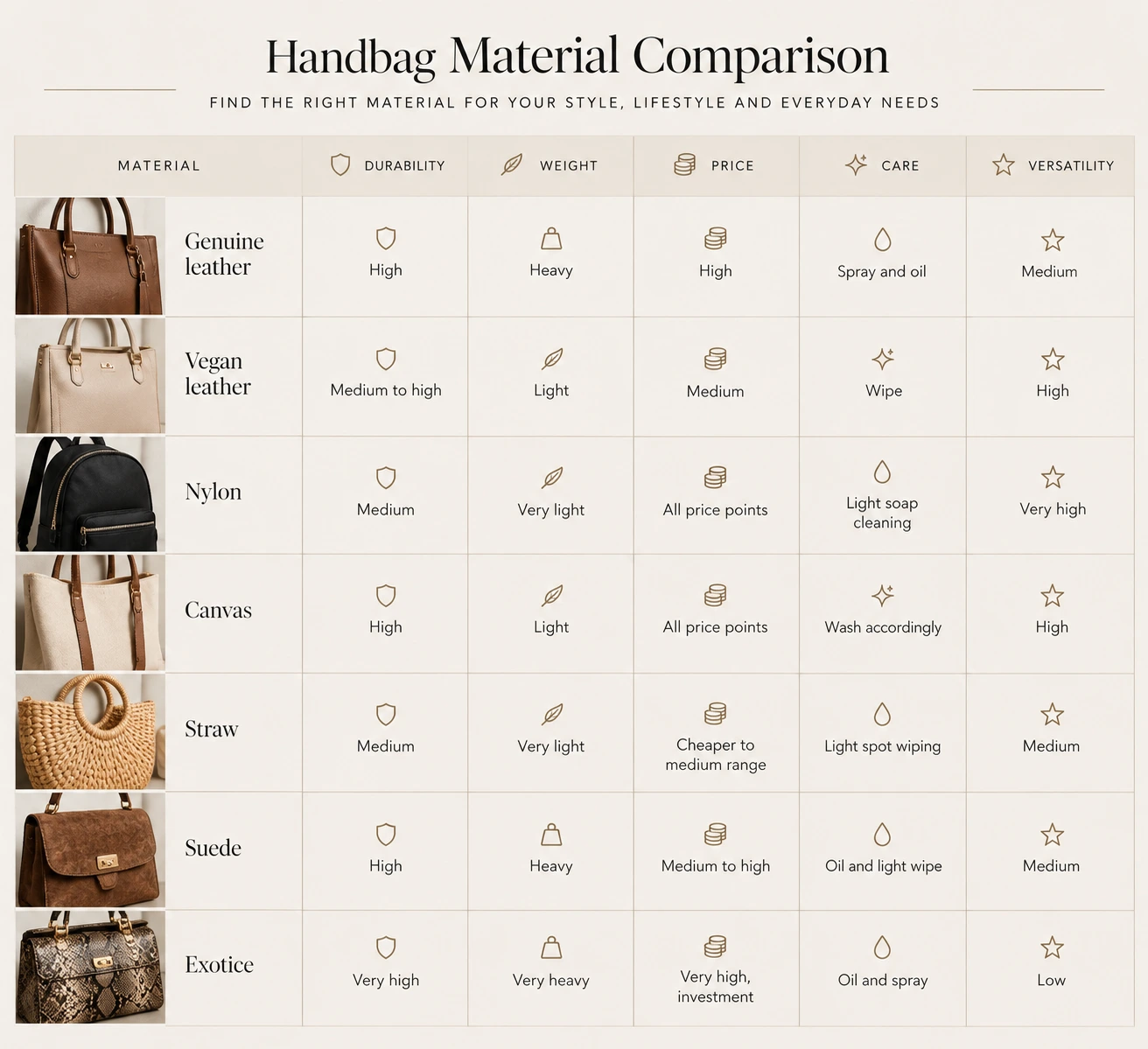
Handbag Material Comparison Table
| Material | durability | weight | price | care | versatility |
| Geniune leather | High | heavy | High | Spray and oil | medium |
| Vegan leather | Medium to high | light | Medium | Wipe | high |
| Nylon | medium | Very light | All price points | Light soap cleaning | Very high |
| Canvas | high | Light | All price points | Wash accordingly | high |
| Straw | medium | Very light | Cheaper to medium range | Light spot wiping | medium |
| Suede | high | heavy | Medium to high | Oil and light wipe | medium |
| Exotice | Very high | Very heavy | Very high, investment | Oil and spray | low |
How to Take Care of Different Handbag Materials
Leather Care Tips
Clean leather handbags regularly with a soft, dry cloth to remove dust and dirt. Apply a quality leather conditioner every few months to keep the leather supple and prevent cracking. Store your bag in a dust bag, stuffed with tissue paper to help maintain its shape, and avoid prolonged exposure to direct sunlight, heat, or moisture.
Cleaning Vegan Leather
Wipe vegan leather with a damp microfiber cloth and mild soap to remove dirt and stains. Avoid harsh chemicals, alcohol-based cleaners, and abrasive scrubbing, as they may damage the surface.
Canvas Washing Instructions
Brush away loose dirt before cleaning. Spot-clean canvas handbags using lukewarm water, mild detergent, and a soft cloth or brush. Avoid soaking the bag unless the manufacturer’s care label specifically recommends it.
Protecting Suede from Damage
Apply a suede protector spray before the first use and reapply it periodically. Use a suede brush to remove dust and restore the nap, and avoid carrying suede bags in heavy rain or damp conditions. If the bag gets wet, blot it gently with a clean cloth and allow it to air dry naturally.
Caring for Nylon Handbags
Nylon handbags are easy to maintain and only require occasional cleaning with a damp cloth and mild soap. Wipe away spills promptly to prevent stains, and allow the bag to air dry completely. Although nylon is water-resistant, avoid exposing it to high heat or prolonged direct sunlight, as this can weaken the fabric or cause fading.
Caring for Straw Handbags
Keep straw handbags away from rain, humidity, and excessive moisture, as natural fibers can warp or develop mold. Remove dust with a soft brush and spot-clean gently using a slightly damp cloth. Store the bag in a breathable dust bag, stuffed with tissue paper to help maintain its shape, and avoid overloading it to prevent stretching or broken fibers.
Final Thoughts
Investing in a well-made handbag crafted from quality materials can pay off in the long run. Not only will it last longer, but it will also maintain its appearance and continue to complement your wardrobe for years to come.
Ignoring the material of a handbag is not something you should do if you want to achieve a more refined and polished look. The material should be chosen carefully and according to your personal needs. The next time you go shopping for a handbag, think about the material first—and see the difference it makes.
lightweight yet durable material like canvas and faux leather are very practical for everyday use.
Wipe vegan leather with a damp microfiber cloth and mild soap to remove dirt and stains. Avoid harsh chemicals, alcohol-based cleaners, and abrasive scrubbing, as they may damage the surface.
Nylon handbags are easy to maintain and only require occasional cleaning with a damp cloth and mild soap. Wipe away spills promptly to prevent stains, and allow the bag to air dry completely
Synthetic or Straw