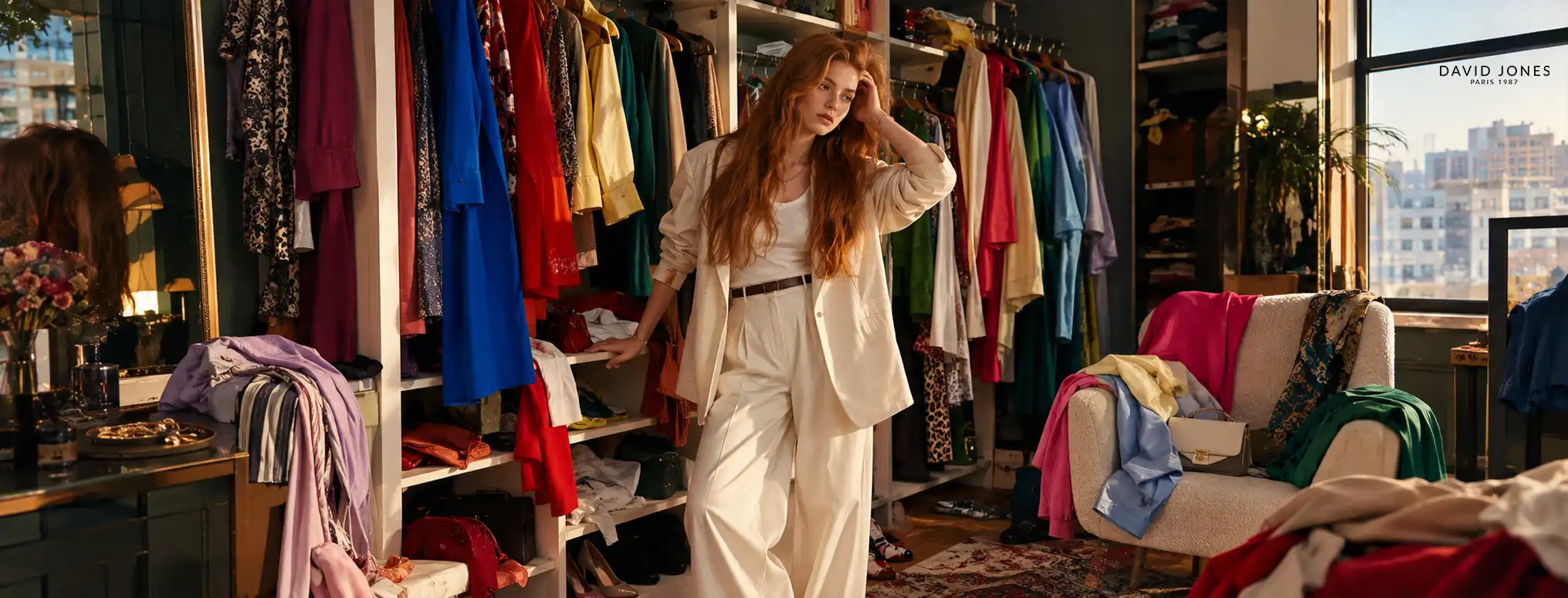
You open your wardrobe in the morning and see plenty of clothes, yet somehow you still think:
“I have nothing to wear.”
The problem is not always that you need more clothes. Often, you are simply repeating the same combinations and seeing each piece in only one way.
A pair of jeans becomes “the jeans I wear with this top,” a blazer becomes “my work blazer,” and a dress is saved for a specific occasion. Over time, your wardrobe can start to feel more limited than it actually is.
The solution is not necessarily another shopping trip. With a few simple styling techniques—changing proportions, adding layers, switching accessories, or combining pieces differently—you can make familiar clothes feel new again.
Why Do You Feel Like You Have Nothing to Wear?
Before changing your wardrobe, it helps to understand what is actually happening.
You Are Repeating Outfit Formulas
Most of us have a personal uniform, even if we do not consciously call it one.
Maybe you always wear jeans with a T-shirt and sneakers. Maybe your work outfit is trousers, a blouse and a structured bag. Maybe dresses only come out for dinners or special occasions.
There is nothing wrong with having reliable combinations. The problem begins when those combinations become the only combinations you can imagine.
When you repeatedly reach for the same pairings, your brain starts connecting certain pieces together automatically. You stop considering other possibilities because the familiar option requires less effort.
That means your wardrobe may not be boring. Your styling habits may simply be predictable.
Your Clothes Are Divided Into “Occasions”
Another reason a wardrobe can feel smaller than it actually is is that we mentally assign clothes to specific situations.
A blazer becomes “office wear.”
A satin skirt becomes “going-out clothes.”
A dress becomes “for weddings.”
A button-down shirt becomes “work clothes.”
Once you put a label on a piece, you stop asking what else it can do.
Try removing those labels.
A blazer can work with jeans. A satin skirt can work with a simple T-shirt and sneakers. A dress can be layered under a jacket and worn during the day. A button-down can be worn open over a tank top instead of tucked into trousers.
The most useful pieces in your wardrobe are often the ones that can move between different parts of your life.
You Are Looking for a New Item Instead of a New Combination
Shopping can feel like the fastest solution to wardrobe boredom.
You see the same clothes and think you need a new top, a new pair of trousers or a new bag to make your wardrobe feel exciting again.
But a new item only creates another possibility. It does not automatically teach you how to combine it with what you already own.
Before buying something because you feel you have “nothing to wear,” try creating three outfits from an existing piece that you have not worn recently.
You may discover that the problem was never the number of clothes in your wardrobe.
It was the number of combinations you were using.
Start by Seeing Your Wardrobe Differently
If you want to get more out of your wardrobe, do not rely on finding inspiration in front of it every morning.
Start when you have time.
Take out the pieces you genuinely enjoy wearing. You do not need to photograph or organize your entire wardrobe at once. Start with around 10 to 15 pieces that you wear regularly.
Choose a few tops, two or three bottoms, a dress, one or two layers, a pair of shoes and some accessories.
Now ask yourself:
How many different outfits can I create from these pieces?
This exercise changes the way you think about clothes.
Instead of seeing each item individually, you start seeing relationships between them.
A shirt is no longer just a shirt. It can be a base layer, an open overshirt, something tied around the waist or a piece underneath a sweater.
A blazer is not just a formal jacket. It can change the mood of jeans, soften a casual dress or add structure to a simple T-shirt.
That shift in perspective is where most of the styling possibilities begin.
The Easiest Way to Create a New Outfit: Change One Element
You do not always need to completely rebuild an outfit.
In fact, changing one important element can be enough to make a familiar combination feel different.
Imagine you normally wear:
Jeans + white T-shirt + sneakers
Instead of replacing everything, change one element at a time.
Try the same outfit with loafers.
Then add a blazer.
Then swap the sneakers for a more refined flat.
Then add a belt and a structured bag.
Then wear the T-shirt slightly tucked instead of leaving it loose.
The base outfit has not changed dramatically, but the overall impression has.
This is one of the easiest ways to refresh your wardrobe because you are not trying to invent an outfit from nothing. You are taking something that already works and changing its direction.
Stop Thinking of Clothes as Complete Outfits
One of the biggest styling mistakes is buying or thinking about clothes as finished looks.
Instead, think in building blocks.
A pair of trousers can belong to several different outfits.
A simple black dress can become casual, polished or evening-appropriate depending on what you wear around it.
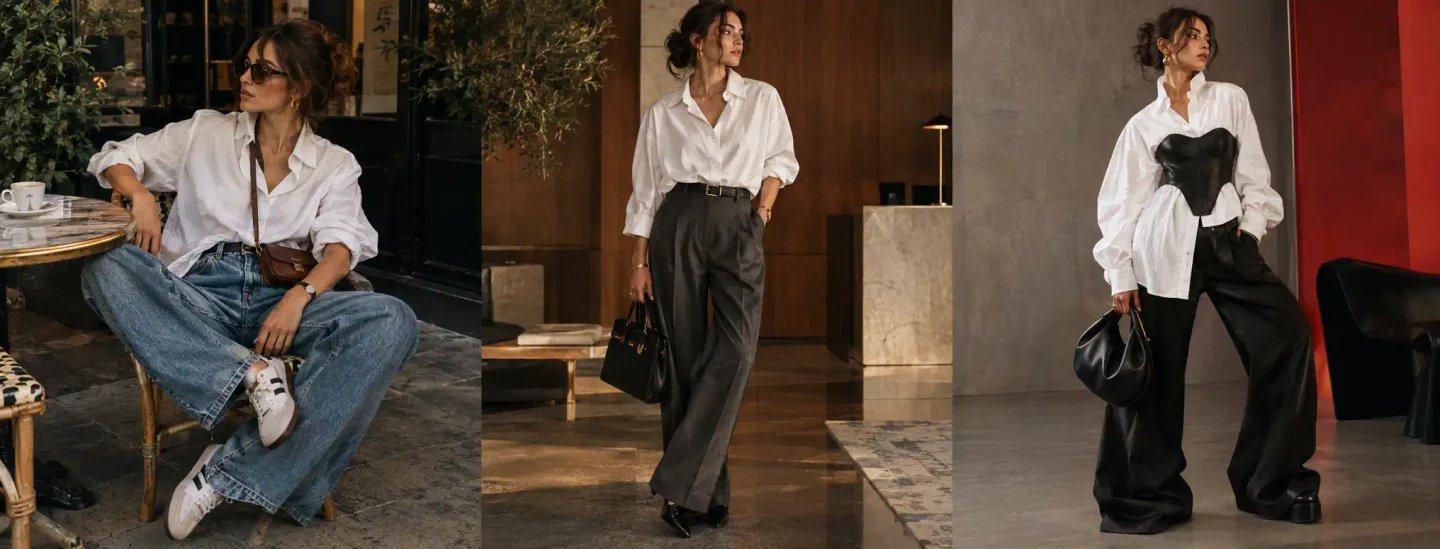
A white shirt can be worn buttoned, open, layered, tucked, partially tucked or worn underneath another piece.
This way of thinking makes your wardrobe more flexible.
When you look at an item, ask:
What else could I wear this with?
Not:
What outfit is this supposed to be part of?
That small change in the question can completely change how you style your clothes.
Use Layering to Make Familiar Clothes Feel New
Layering is one of the most effective ways to create new outfits without buying new clothes.
And layering does not necessarily mean wearing five pieces at once.
It can be as simple as changing what sits over or underneath a familiar item.
Try wearing:
- A shirt underneath a sleeveless dress
- A blazer over a basic T-shirt
- A cardigan over a button-down
- A fitted top underneath a looser shirt
- A jacket over a simple dress
- A shirt worn open over a tank top
- A sweater over a longer shirt so the hem is visible
The key is to create different visual levels.
If everything ends at exactly the same point, an outfit can feel flat. Showing a little of a shirt underneath a sweater, exposing a jacket sleeve or allowing a longer hem to appear can give the combination more depth.
Play With Proportion, Not Just Pieces
Sometimes you do not need a different item.
You need to wear the same item differently.
This is where proportion becomes important.
Take a loose shirt and wide-leg trousers. The combination may feel too relaxed when both pieces are completely oversized.
Now try the same shirt partially tucked in.
Or roll the sleeves.
Or add a belt.
Or replace the shoes with something more structured.
The clothes are identical. The proportions are not.
You can experiment with:
Oversized top + more defined bottom
Fitted top + wide-leg trousers
Shorter jacket + longer skirt
Long shirt + slim trousers
Loose dress + structured outer layer
There is no single correct formula. The point is to create a relationship between the shapes rather than allowing every piece to compete for space.
The “Third Piece” Trick
If an outfit feels unfinished, the answer is often not another completely different outfit.
Try adding a third visible element.
For example:
T-shirt + jeans
can become
T-shirt + jeans + blazer
or
T-shirt + jeans + cardigan
or
T-shirt + jeans + lightweight jacket
That extra layer gives the outfit another visual point and often makes a very basic combination feel intentional.
The third piece does not have to be a jacket. It could be a vest, scarf, cardigan, statement belt or another accessory that adds structure or interest.
This is particularly useful when you feel that your everyday outfits are technically fine but somehow look incomplete.
Change the Mood With Shoes and Accessories
Accessories are often treated as finishing touches, but they can completely change the character of an outfit.
Take the same trousers and top.
Add sneakers and a casual crossbody, and the outfit becomes relaxed.
Change the shoes to loafers and add one of your favourite handbags for women, and the same outfit can feel much more polished.
Add statement jewellery and a smaller evening bag, and the same clothing can move toward dinner or an evening setting.
The clothes have not changed.
The message of the outfit has.
This is why accessories are worth considering when you feel bored with your wardrobe. They allow you to change the direction of an outfit without replacing its foundation.
Your bag can play an especially important role here. A casual crossbody bag, structured shoulder bag or larger tote can give the same clothing a completely different visual character.
Try Styling One Item in Three Different Ways
Here is a practical exercise you can use whenever your wardrobe feels boring.
Choose one item you already own.
It could be a white shirt, black trousers, denim jacket, midi skirt or simple dress.
Now create three completely different outfits around it.
Look One: Everyday
Keep the outfit comfortable and simple.
Pair the piece with your favourite casual basics and everyday shoes.
Look Two: Polished
Change the shoes, add a structured layer and finish the look with a shoulder bag for a more polished appearance.
Look Three: Unexpected
This is where you stop following your usual formula.
Try a different color combination, layer the piece in a way you normally would not, or pair it with something that normally belongs to another part of your wardrobe.
The third outfit is usually the most valuable because it forces you to leave your styling comfort zone.
You may not love the first attempt, and that is completely fine. The goal is to discover possibilities.
Borrow From Different Parts of Your Wardrobe
Another useful trick is to stop organizing your clothes mentally by occasion.
Instead, combine pieces from different categories.
Take something you normally wear to work and combine it with something you normally wear casually.
For example:
Work trousers + casual T-shirt + sneakers
or
Casual jeans + tailored blazer + refined shoes
or
Day dress + structured jacket + everyday bag
This creates contrast, which often makes an outfit feel more modern.
You do not need every item to have the same level of formality. In fact, mixing polished and relaxed pieces can make an outfit feel more natural and less predictable. For more ways to make different pieces work together, explore our guide to smart outfit styling ideas.
Use Color to Make Old Combinations Feel Different
You do not need to learn an entire color theory course to use color more creatively.
Start by looking at the colors you already own.
Take one familiar outfit and change just one color.
If you normally wear black trousers with a white top, try adding a colored bag or shoe.
If you usually wear neutral beige and cream, introduce a deeper shade through your accessories.
You can also create a monochromatic outfit by combining different shades of the same color.
The important thing is not to collect more colors simply for the sake of variety. It is to notice combinations that already exist in your wardrobe but that you rarely put together.
For a deeper guide to color relationships, contrast and tonal dressing, see our guide to How to Mix and Match Colors in Your Outfit.
Wear Your “Special” Pieces on Ordinary Days
One of the easiest ways to make your wardrobe feel bigger is to stop saving everything for the perfect occasion.
That beautiful skirt does not necessarily need a dinner reservation.
That blazer does not have to wait for an important meeting.
That dress does not have to wait for an event.
Try taking one piece that feels “too special” and deliberately making it casual.
Wear a dress with sneakers.
Pair a satin skirt with a simple T-shirt.
Wear a structured jacket with jeans.
Use a statement accessory with a very simple outfit.
When you do this, your wardrobe suddenly becomes more useful because fewer pieces are restricted to one type of occasion.
Try the Opposite of Your First Instinct
This is one of the most effective exercises when you are genuinely stuck.
Choose an outfit you would normally wear.
Then ask:
What would I normally do here?
If the answer is “wear sneakers,” try flats.
If you normally tuck your shirt in, leave it loose.
If you always wear your blazer closed, wear it open.
If you normally choose a neutral bag, try a stronger color.
If you usually keep your accessories minimal, add one noticeable piece.
You do not have to keep the result. You are simply testing another possibility.
Styling improves when you experiment enough to discover what you actually like instead of automatically repeating what you already know works.
Take a Photo Instead of Trusting the Mirror
Sometimes an outfit feels strange in the mirror because you are not used to seeing yourself in that combination.
Take a quick full-length photo.
This is especially useful when you are experimenting with proportions, layering or pieces you do not normally wear together.
A photo gives you a little distance from the outfit. You can see whether the proportions feel balanced, whether one piece dominates the look or whether something simply needs to be adjusted.
You may also discover that an outfit you almost rejected actually works once you see the whole silhouette.
Create Outfit Formulas You Can Reuse
The goal is not to memorize hundreds of outfit ideas.
It is to create a few outfit formulas that you can adapt.
For example:
Wide-leg trousers + fitted top + structured layer
Jeans + simple top + statement accessory
Midi skirt + casual top + everyday shoes
Dress + jacket + contrasting shoes
Trousers + shirt + belt + bag
Once you understand a formula, you can change the individual pieces without starting from zero.
This makes getting dressed much easier on busy mornings because you are working from a structure rather than trying to invent something completely new.
Use Your Least-Worn Pieces as a Styling Challenge
Look at the clothes you rarely wear.
Do not immediately assume they were bad purchases.
Instead, choose one and ask yourself why it stays in your wardrobe.
Is it difficult to combine?
Is the fit slightly wrong?
Does it feel too formal?
Is the color unfamiliar?
Does it only work with one particular item?
Once you know the problem, try solving it through styling.
A difficult skirt may become easier with a simple knit.
A formal blazer may feel more wearable with denim.
A bold top may need understated trousers rather than another statement piece.
If you still cannot find a realistic way to wear something after several attempts, then you have useful information: the item may simply not fit your current lifestyle.
That is different from automatically buying something new because your wardrobe feels boring.
Stop Trying to Make Every Outfit Completely New
There is another mindset shift that can make getting dressed much easier:
An outfit does not have to be completely different to be good.
You can repeat a favourite pair of trousers.
You can wear the same bag several times in a week.
You can have a reliable outfit formula.
Personal style is not about creating a brand-new look every morning. It is about knowing how to make familiar pieces work for different situations.
A wardrobe becomes more useful when you can repeat what works while still having enough flexibility to change the details.
When You Really Should Consider Buying Something New
Restyling your existing wardrobe does not mean you should never shop.
Sometimes there genuinely is a gap.
Maybe you have plenty of tops but almost no versatile bottoms. Maybe you have work clothes but nothing that works for your weekends. Maybe you own beautiful statement pieces but lack simple layers that connect them.
Before buying anything, identify the actual gap.
Instead of saying:
“I need new clothes.”
Try:
“I need a lightweight layer that works with at least three outfits I already own.”
That is a much more useful shopping decision.
The new piece should create several possibilities rather than become another isolated item in your wardrobe.
The 10-Minute Wardrobe Reset
If your wardrobe currently feels completely uninspiring, try this simple exercise.
Set aside 10 minutes and choose:
- One pair of trousers
- One pair of jeans
- Two tops
- One dress or skirt
- One jacket or layer
- Two pairs of shoes
- Two bags
- Three accessories
Now create as many combinations as you can.
Do not judge them immediately.
Take photos of the combinations you like and save them in a folder on your phone.
The next time you have nothing to wear, you do not have to start from scratch.
You already have your own personal styling reference.
After doing this several times, you will also start noticing which pieces work hardest in your wardrobe and which ones consistently get ignored.
That information is far more useful than simply knowing how many clothes you own.
What to Do When Your Wardrobe Still Feels Boring
If you have tried different combinations and everything still feels wrong, stop styling for a moment.
Ask yourself whether your wardrobe actually reflects your life now.
Your style can change, and sometimes changing your wardrobe style is simply a reflection of how your life, routine and preferences have changed.
The clothes you loved two years ago may no longer feel like you. Your daily routine may have changed. Your work environment may be different. You may prefer different silhouettes, colors or levels of formality now.
There is nothing wrong with that.
The purpose of restyling your wardrobe is not to force yourself to love every piece you own. It is to discover what is still useful, what has potential and what no longer belongs in your everyday life.
Once you understand that, future shopping becomes much more intentional.
The Real Solution to “I Have Nothing to Wear”
Feeling like you have nothing to wear does not always mean your wardrobe needs new pieces. Sometimes, you simply need to experiment with different combinations or move away from familiar styling habits.
The answer is not to constantly replace your wardrobe. Start by changing how you use it.
Layer something differently. Change the proportions. Take a formal piece into a casual outfit. Use accessories to change the mood. Pair two pieces that normally live in completely different parts of your wardrobe. Wear something you have been saving for a “special” occasion.
Most importantly, stop looking at your wardrobe as a collection of finished outfits.
Look at it as a collection of possibilities.
That is when a wardrobe you thought was boring can suddenly start feeling much bigger.
For more everyday styling inspiration and versatile fashion pieces, explore David Jones UAE.
Start with pieces you already wear and change one element at a time. Experiment with layering, proportions, shoes, bags, accessories and color combinations. You can also combine casual and formal pieces that you normally keep separate.
Try wearing them in a different way rather than simply pairing them with a different item. Change how a shirt is tucked, add a layer, switch your shoes or use a different bag and accessories. Small changes in styling can alter the entire impression of an outfit.
Identify exactly what your wardrobe is missing. Then check whether the new piece can work with several things you already own. Buying a piece that creates multiple outfits is generally more useful than buying something that only works with one existing combination.
Look for an actual gap rather than relying on the feeling that your wardrobe is boring. If you repeatedly struggle with the same situation because you lack a particular type of piece, that is a clearer sign that something is missing.
-
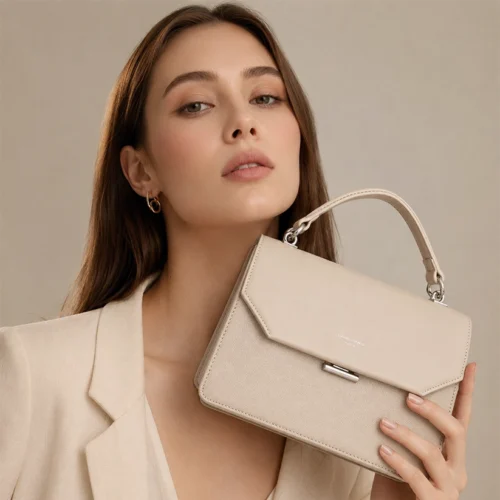 229.00 AEDColor#0f0f0fBlackCoconut Cream#c3c1b9Moonstruck#b7a78fOxford Tan#e0c7d7Snow Lilac
-
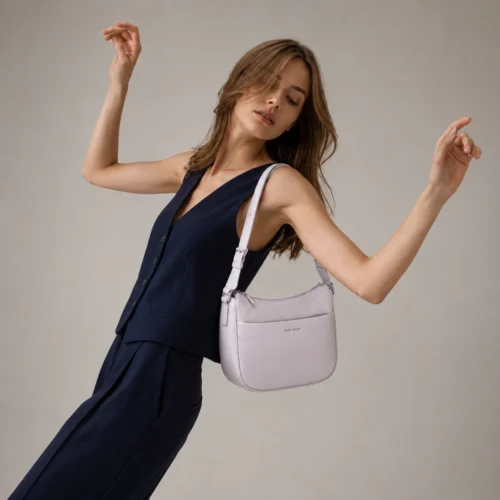 187.00 AEDColor#0f0f0fBlackCoconut Cream#c3c1b9Moonstruck#e0c7d7Snow Lilac
-
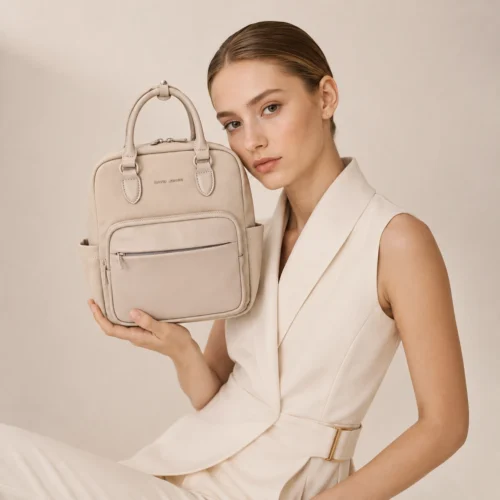
-
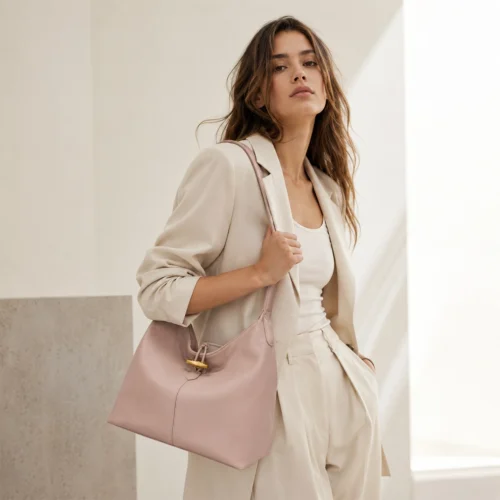 202.00 AEDColor#ba9f99Adobe Rose#4b596eBering sea#0f0f0fBlack#ddd0c9Warm Taupe#582b36Windsor Wine