
How to choose the right outfit for your body types
Everybody is unique, and there is no single style that suits everyone. Understanding your body proportions can help you choose flattering silhouettes, fabrics and accessories while staying true to your personal style.
This guide explores practical styling tips for hourglass, pear, apple, rectangle and inverted triangle body shapes. These categories are simply helpful references, as many people share characteristics of more than one shape. Body proportions can also influence the most suitable accessories, including size and structure, when you shop handbags for women.
Understanding your body type
To understand your body measurements, it is best to first understand body proportions. Body proportion refers to how different parts of your body compare in size and length, such as the relationship between your shoulders, waist, hips, torso, and legs.
The goal is not to change your body or make every part look the same. Instead, understanding proportion helps you choose clothes that work with your natural shape and create a balanced, intentional outfit.
Body relationship refers to the overall image your body parts create and how they relate to each other.
Dress your body shape
Dressing your body shape is about understanding proportions and choosing pieces that highlight the features you enjoy most. The right neckline, waistline, length, or silhouette can change the overall balance of an outfit and create a more polished style.
Different type of body shapes
You can identify your general body shape by comparing the proportions of your shoulders, waist and hips. If the differences are not immediately clear, take your measurements and compare them.
Rather than focusing only on a body-shape label, consider where your proportions are wider, narrower, longer or shorter. Details such as the position of a waistband, jacket length, trouser rise and neckline can visually influence these proportions.
Once you understand your proportions, use our guide to find your personal style and choose outfits that suit both your shape and daily routine.
Simple questions to answer
The first question is whether your hips are wider than your shoulder or is it shorter and the same length?
The second question focuses on your mid section and it is whether your waist is wider than your chest or is it the same size?
Last but not least is how you view your chest and how it’s length is seen compared to your hips.
Rectangular Body Shape
Specific Characteristics :
A rectangular body shape has relatively similar measurements around the shoulders, waist, and hips, with less definition at the waist. Your body shape tends to look straight and balanced from top to bottom. Some people might prefer to create more curves and details to their body silhouette.
choose clothing that adds shape around the waist, such as belted dresses, fitted jackets, wrap tops, and high-waisted bottoms. Layering and details around the bust or hips can also add dimension to the overall silhouette.
Pear Body Shape
Specific Characteristics :
Just like the fruit, a pear body shape is characterized by hips that are wider than the shoulders, with a more in between waist length. The lower body naturally carries more visual weight than the upper body.
To create balance, consider adding interest and structure to the upper half with statement necklines, shaped coats, more accessories like necklaces, detailed tops, structured shoulders, or lighter colors. A-line skirts, straight-leg trousers, and well-fitted bottoms can complement the hips.
Apple Body Shape
Specific Characteristics :
An apple body shape generally has more fullness around the midsection, with comparatively slimmer legs and arms. Most of the body weight is focused on the mid section in an apple body shape and the measurements are often close to each other.
Try choosing more flowing fabrics, V-necklines, longer layers, and straight or gently structured silhouettes can create a streamlined look. Empire-waist and wrap styles can also provide definition without feeling restrictive around the middle.
Hourglass Body Shape
Specific Characteristics :
The hourglass shape typically features shoulders and hips that are relatively similar in width, combined with a clearly defined waist.
Wrap dresses, tailored blazers, high-waisted trousers, pencil skirts, and fitted tops can emphasize the natural waist while following the body’s curves. Avoiding overly loose layers can help maintain the definition of the silhouette.
Diamond Body Shape
Specific Characteristics :
A diamond body shape generally has more visual fullness around the waist and midsection, while the shoulders and hips appear narrower in comparison. The waist is often less defined, and the legs can appear relatively slender. V-neck or open necklines, structured outer layers, straight-leg trousers, and A-line silhouettes can help create a balanced appearance.
The main difference between apple and diamond body shapes is where the body carries the most visual width and how the shoulders and hips relate to the waist.
Choosing pieces that skim rather than cling to the midsection can also create a comfortable, polished look.
Inverted Triangle Body Shape
Specific Characteristics :
An inverted triangle body shape typically has shoulders that are wider than the hips, creating a stronger visual presence through the upper body. The waist may be defined to varying degrees, while the hips and legs are comparatively narrower.
To create balance, choose softer or simpler details around the shoulders and add visual interest to the lower half. Wide-leg trousers, A-line skirts, pleated bottoms, and patterned or textured trousers can help create more proportion between the upper and lower body. This type of body complements any type of skirts so make sure you are exploring all your skirt options.
| Body Shape | Main Characteristics |
| Rectangular | Shoulders, waist, and hips are relatively similar in width; waist is less defined. |
| Pear | Hips are wider than the shoulders; waist is often well defined. |
| Apple | More fullness through the upper body and midsection; hips are comparatively narrower. |
| Hourglass | Shoulders and hips are relatively similar in width; waist is clearly defined. |
| Diamond | Midsection is the widest point; shoulders and hips are comparatively narrower. |
| Inverted Triangle | Shoulders are wider than the hips; the upper body has more visual width. |
Why Clothing and Accessory Proportions Affect Your Overall Look
Clothing and accessories can influence the visual balance of an outfit by highlighting different areas and changing how the body’s proportions appear. The shape, size and placement of a handbag are especially important because the bag adds visual weight wherever it rests.
A bag should feel proportionate to both your frame and the outfit. A very large tote may overwhelm a petite silhouette, while a very small handbag can appear out of scale with an oversized or layered look. These are not strict rules, but useful guidelines for creating the effect you prefer.
For example:
- Short-strap shoulder bags draw attention to the upper body because they sit close to the chest or waist.
- Belts and fitted tops can add definition to the midsection.Crossbody create a diagonal line across the body, while the strap length determines where attention falls.
- Large totes add more visual weight and usually work best when their size feels balanced with the wearer and the rest of the outfit.
Key Factors to Consider
When choosing a bag, begin with its practical purpose and then consider how its design works with your outfit and proportions.
Pay attention to:
- Size: Choose enough room for your essentials without making the bag unnecessarily bulky.
- Shape: Structured bags create a polished appearance, while softer silhouettes feel more relaxed.
- Strap length: Check where the bag rests against your body and whether that position feels comfortable.
- Outfit volume: Balance oversized clothing with a bag that remains visible without making the overall look feel heavy.
- Comfort and function: The right bag should suit your routine, carrying habits and personal style.
Body-shape guidance can help narrow down the options, but it should not limit your choice. The best bag is one that feels comfortable, carries what you need and creates the look you want.
Flattering your top wears
| Body Shape | Recommended Top Pieces |
| Rectangular | Wrap tops, peplum tops, fitted shirts, belted blouses, sweetheart necklines, cropped jackets |
| Pear | Boat-neck tops, off-shoulder tops, puff-sleeve blouses, statement collars, structured blazers, embellished tops |
| Apple | V-neck tops, wrap tops, empire-waist blouses, flowing tunics, open-front cardigans, longline blazers |
| Hourglass | Wrap tops, fitted blouses, V-neck tops, tailored shirts, sweetheart necklines, waist-length jackets |
| Diamond | V-neck tops, scoop necks, structured jackets, straight-cut blouses, open-front layers, tops that skim the midsection |
| Inverted Triangle | V-neck tops, simple fitted shirts, soft-flowing blouses, narrow lapels, darker/simple tops, minimal shoulder detailing |
How to highlight your bottom pieces
| Body Shape | Recommended Bottom Pieces |
| Rectangular | High-waisted trousers, pleated pants, wide-leg trousers, A-line skirts, cargo pants, belted bottoms |
| Pear | Straight-leg trousers, bootcut jeans, A-line skirts, dark-wash jeans, wide-leg trousers with a clean fit |
| Apple | High-rise straight-leg trousers, bootcut jeans, A-line skirts, flat-front pants, softly structured trousers |
| Hourglass | High-waisted jeans, pencil skirts, tailored trousers, bootcut trousers, fitted midi skirts, high-waisted wide-leg pants |
| Diamond | Straight-leg trousers, bootcut jeans, A-line skirts, flowing midi skirts, flat-front trousers, structured wide-leg pants |
| Inverted Triangle | Wide-leg trousers, flared jeans, pleated trousers, A-line skirts, full midi skirts, patterned or textured bottoms |
Outfit Choices to Approach with Care
Balance is an important part of styling, but it should not limit what you wear. If you love a particular design, you can usually adapt it by changing the length, defining the waist, choosing a more structured fabric or balancing volume with a slimmer piece elsewhere in the outfit.
Instead of avoiding specific styles because of your body shape, pay attention to how each garment fits and where it adds volume or definition. For example, a straight-cut dress can be styled with a belt, cropped jacket or structured bag to create more shape. The aim is to understand how different elements work together and adjust them until the outfit feels comfortable and visually balanced.
How to Choose the Right Bag for Your Body Type
A handbag is both a practical accessory and part of an outfit’s proportions. Its size, shape, structure and strap length influence where it sits on the body and which area it highlights. However, body shape should be only one consideration; your lifestyle, comfort and daily needs are equally important.
The right bag should complement your clothing without overwhelming it and remain comfortable to carry. Before buying, consider how the bag looks when worn, where it rests against your body and whether it holds everything you regularly need.
Bag Shape and Structure
Structured handbags and shoulder bags create clean lines and can make an outfit feel more polished. Softer, slouchier designs give a relaxed impression and work well with casual clothing. Rather than trying to correct your body shape, choose a structure that balances the style and volume of your outfit.
Bag size also affects the overall look. A compact bag can add a subtle finishing touch, while a larger tote creates more visual weight. Petite shoppers do not need to avoid large bags entirely, but should check that the bag feels comfortable and does not dominate the outfit. Taller or broader frames can also wear small bags when the contrast is intentional.
Bag Type and Category
Different bag styles sit in different positions and support different routines. Tote bags offer capacity, shoulder bags are versatile, crossbody bags provide hands-free convenience, and top-handle bags create a more refined appearance.
Select the category according to both function and proportion. A crossbody bag may be suitable for everyday errands, while a structured handbag can complement workwear or formal outfits. If you need more practical guidance, read our article on how to choose a bag for work, travel or everyday use.
Strap Length and Placement
A bag’s position can influence where attention falls within an outfit. A short shoulder strap keeps the bag close to the upper body, while a longer crossbody strap may place it near the waist or hips.
Adjust the strap while wearing your complete outfit. The ideal position should feel comfortable, allow easy movement and create the proportions you prefer.
Function and Comfort
Consider what you need to carry for the occasion. A compact bag may be sufficient for an evening event, while a workday could require space for documents, a tablet or a laptop.
Before choosing, check the bag’s empty weight, strap comfort, closure and internal compartments. The best option should complement your outfit while remaining practical and comfortable throughout the day.
Which Handbag Suits Your Body Type?
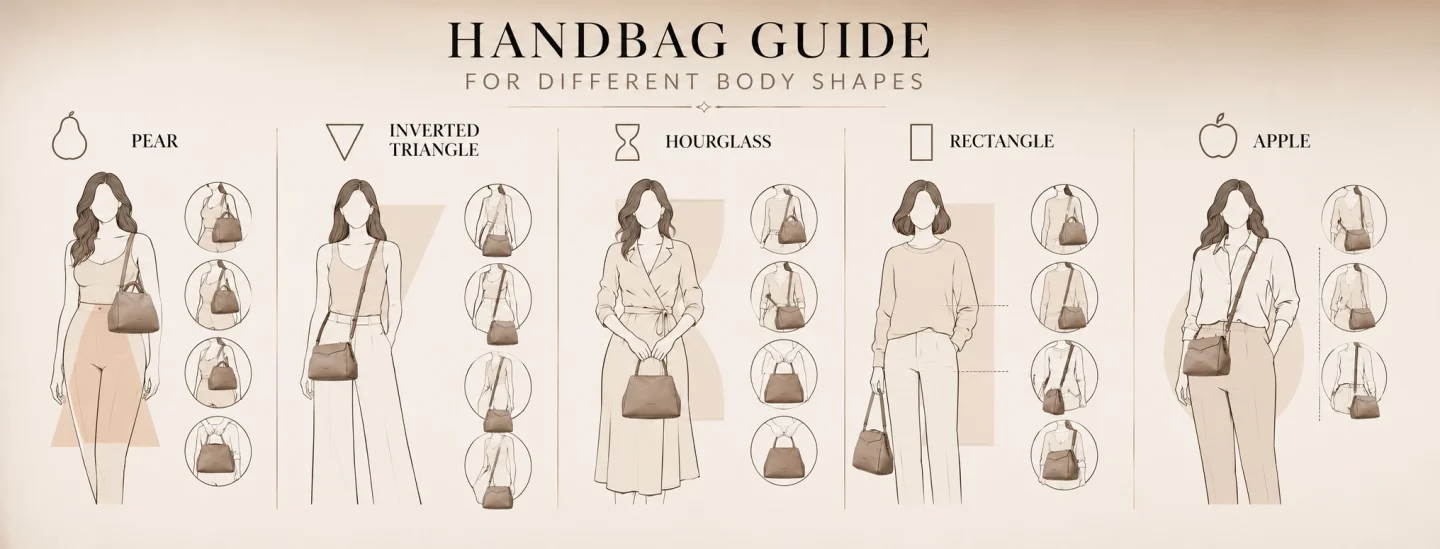
There is no single handbag style that suits everyone with the same body shape. Instead of treating body-shape recommendations as strict rules, use them as flexible guidelines to find a bag that complements your proportions, outfit, lifestyle and daily needs.
The following section explains how different bag sizes, shapes and strap lengths can work with common body types to create a balanced overall look.
Best Bags for Petite Frames
Compact and medium-sized bags often complement petite frames without overwhelming the outfit. Small crossbody bags, neat shoulder bags and softly structured styles are practical options for everyday use.
This does not mean petite women must avoid large bags. If you need the capacity of a tote, choose a lightweight design with clean proportions and comfortable straps. The bag should support your routine without feeling bulky or difficult to carry.
Best Handbags for Tall Women
all women can carry a wide range of bag sizes, from mini bags to oversized totes. Medium and large shoulder bags, hobo bags and a women’s everyday tote bag can complement a taller frame, while a mini bag can create an intentional contrast.
Pay particular attention to strap length. A crossbody strap that is too short may sit awkwardly on the torso, so look for an adjustable design that positions the bag comfortably near the waist or hip.
Best Bags for Pear-Shaped Women
Pear-shaped figures usually have hips that are wider than the shoulders. If you want to create visual balance, choose a shoulder bag, baguette bag or top-handle design that sits above the widest part of the hips.
Interesting colours, structured shapes and subtle hardware can also draw attention towards the upper body. Crossbody bags can still work well, but adjusting the strap so the bag does not rest directly on the widest part of the hips may create a more balanced look.
Best Handbags for Curvy or Apple-Shaped Figures
Medium-sized structured handbags, refined totes and top-handle bags can add definition without introducing unnecessary volume. Clean lines and simple shapes usually create a polished appearance.
For apple-shaped figures, a bag that rests slightly above or below the fullest part of the midsection may feel more balanced. Comfort is equally important, so choose straps that sit securely without pressing against the body.
Best Bags for Athletic or Rectangle Body Shapes
Rounded and softly structured bags can add contrast to the straighter lines of an athletic or rectangle-shaped figure. Crescent bags, hobo bags and bucket bags are useful choices when you want to introduce softness and movement.
If you prefer a sharper, more minimalist look, structured and boxy bags can work just as well. Choose the shape according to the effect you want rather than treating either style as a strict rule.
Best Bags for Inverted Triangle Body Shapes
Inverted triangle figures generally have shoulders that are wider than the hips. Bags that sit near the waist or hips can add visual interest to the lower half and help balance the upper body.
Crossbody bags with adjustable straps, medium shoulder bags and softly structured totes are practical options. Curved shapes, colour and subtle details can also add dimension without competing with the shoulder line.
Which Bag Should You Choose?
| What Are You Looking For? | Your Perfect Match |
|---|---|
| A polished everyday look | Medium-sized handbag |
| Hands-free convenience | Crossbody bag |
| A professional office style | Structured handbag |
| More space for daily essentials | Tote or large shoulder bag |
| Comfortable weight distribution | Backpack |
| A relaxed everyday style | Soft shoulder or hobo bag |
| A compact evening option | Mini handbag or clutch |
| Maximum styling versatility | Medium-sized bag in a neutral colour |
Use these suggestions as a starting point rather than fixed rules. Your lifestyle, carrying needs and comfort should always guide the final choice.
How Strap Length Affects the Overall Look
Strap length determines where a bag rests on the body. This placement can influence the proportions of an outfit and which area receives more visual attention.
Top Handles
Top-handle bags are carried by hand or at the elbow, so they do not create a line across the torso. Their defined shape often adds structure and polish to professional or formal outfits.
Shoulder Straps
A shoulder bag draws attention to the area where it rests. Shorter straps position the bag near the upper body, while longer shoulder straps place it closer to the waist or hips.
Adjustable Crossbody Straps
An adjustable strap allows you to control both comfort and placement. Wearing the bag higher creates a compact appearance, while positioning it lower produces a longer diagonal line and a more relaxed look.
Shorter Crossbody Straps
A shorter crossbody strap keeps the bag close to the upper torso. This position works well when you want the bag to remain secure, compact and easy to access.
Longer Crossbody Straps
A longer strap places the bag near the waist or hips. It can create a longer diagonal line across the body, but the bag should not hang so low that it restricts movement.
The Practical Test
When trying a bag, do not judge it only while standing still. Adjust the strap, walk, sit down and wear it with the type of clothing you use most often.
Check that:
- The bag rests in a comfortable position.
- The strap does not slip or press against the shoulder.
- You can reach your belongings easily.
- The bag does not restrict movement.
- Its size and placement feel balanced with the complete outfit.
Conclusion
Choosing the right handbag involves more than following trends or body-shape rules. Size, structure, strap length and placement can all influence how a bag works with your outfit, but function and comfort are just as important.
Use these guidelines to understand the visual effect of different designs, then select a bag that suits your lifestyle, carries your essentials and makes you feel comfortable and confident.
You can identify your body type by comparing the proportions of your shoulders, waist, chest, and hips. If your hips are wider than your shoulders, for example, you may have a pear-shaped body, while similar shoulder and hip measurements with a defined waist usually indicate an hourglass shape.
The best handbag depends on your proportions, height, and where the bag sits on your body. Petite women may prefer small to medium-sized bags, while taller women can usually carry larger shoulder bags, totes, and hobo bags more proportionally. The goal is to choose a bag that complements your frame without overwhelming it.
Yes. Strap length determines where the bag sits and which area of your body it draws attention to. Shorter straps position the bag higher on the torso, while longer crossbody straps create a longer diagonal line and can give the outfit a more elongated and relaxed appearance.