If you are a leather enthusiast or even someone somewhat interested in fashion, you understand the differences of what makes leather unique. Damaged leather can often be the result of too much water exposure, lack of natural oil, sun burn of improper storage which shows itself as dryness, cracks and even peeling. Your leather handbag can even tear up and instead looking for ways to repair your old leather maybe it’s best to take care of it, right now.
One of the ways to do so is to learn how to care for our leather products. Welcome to David Jones UAE’s ultimate leather guide.
In this article we’ll take a look at the dos and don’ts of the leather caring world, give you simple yet working ways to make sure your leather keeps its beauty and quality intact.
Know your leather before you clean it
it is important to understand leather and its structure to make sure we know how to take care of it. On our complete leather buying guide, we have a full article all about leather and leather types and even how they are produced, so be sure to check it out. But for now, we will go through the type three most demanded leather types and their strength.
full grain and top grain leather:
Made from the outermost layer of the hide with its natural grain intact. These types of leather are durable, develop beautiful patina over time, and retains natural markings. They can be used in any type of product that requires a durable material.
Suede and nubuck:
soft, velvety leathers made from the inner layer of an animal hide or from the underside of split leather. They are often produced in a genuine leather way, which simply is a tier B type of leather. Genuine leather is made from the outer surface of the hide and finely buffed to create a soft, velvety texture.
Faux and vegan leather:
Faux and vegan leather are often made from synthetic materials designed to look and feel like genuine leather, commonly made from polyurethane (PU) or PVC. It is typically more affordable and easier to maintain than real leather and they are more cruelty free.
The Essentials of Leather Care
When it comes to leather care, we as a leather handbag brand understand the assignment. Purchasing leather is just the beginning, but do not worry. Leather care tips are versatile according to your budget and interest. From homemade leather care to high end luxury leather products, we have the full receipt.
There are three major steps to take to make sure you are taking care of leather properly. Step one is to keep your leather fresh and away from any dirt. Missing this important key factor can even influence step two and three. So be aware, a clean leather equals a happy you.
Step two is to remind our leather of its natural capabilities, meaning adding a touch of conditioner. For genuine leather, a suitable conditioner may help maintain softness and appearance. Faux and PU materials may require different care, so always follow the manufacturer’s or product-specific care instructions.
Also To maintain the quality and extend the lifespan of your leather items, it’s essential to follow a consistent care routine. Clean your leather bags and shoes weekly and gently remove dust from your leather jacket. Additionally, use a leather conditioner every few months to keep the material soft and well-preserved.
By now you definitely know how important keeping your leather wallet, formal handbag and your favorite shoulder bag truly is.
so, for the rest of the article, we are breaking down both sides of the coin. The do not and the to do list. Leather can often be ruined and damaged just by a simple neglect, so for every step of doing it takes one smart step taking back, with every one thing you do there is a don’t side to it.
To maintain its durability and its unique texture you need to avoid certain things.
How to clean leather properly
The first rule in the school of leather is simple: cleaning leather can be done using leather cleaning products, especially if you have real leather. cleaning products such as spray and kit are available to do so.
Leather cleaning sprays are a popular choice, just a small bit of them with water can be a light weight and nourishing option to keep their texture fresh. If you have a full grain leather or any type of High-quality leather, make sure to use a non-alcohol spray.
If you need something quick and easy to carry, Leather wipes are here to help you remove stains and dirt on a daily basis. If none of the other two work for you do not worry, a leather soap can help you clean and moist in one simple step.
But if you are an environmentalist and a fan of nature or in any other way not a fan of chemical products, For either genuine or faux leather, choose a cleaning method and product that is specifically suitable for the material, and test it on a small inconspicuous area first.
How to remove common leather stains:
Water: Gently blot the area with a clean cloth or tissue. You can also air-dry naturally but make sure to avoid direct heat, then apply a suitable leather conditioner if needed to balance out the moisture.
Mold: Using a soft leather brush, swipe away the mold then wipe the leather with a lightly dampened cloth and an appropriate leather cleaner. Let it air dry in a well-ventilated area and avoid soaking the leather.
Grease and Oil: Remove the excess oil immediately with a clean cloth without rubbing. For light stains, sprinkle a small amount of cornstarch or talcum powder over the area, leave it for several hours to absorb the oil, then gently brush it away.
Dirt: Remove loose dirt with a soft, dry cloth or leather brush. For remaining marks, use a small amount of leather cleaner on a damp cloth and gently wipe the surface, then allow it to air-dry.
Don’t Use Excess Water or Harsh Chemicals (warning) :
When it comes to the relation between leather and water, the less is more. You might feel tempted to give your leather bag to your local dry cleaner or even wash it yourself, but this one-time mistake can have a long-term effect. Water should only be used as a facilitating material to improve the living conditions of the product. No need to mention that some harsh chemicals often mistakenly get used to wash and remove stains, so avoid any heavy alcohol and petroleum and mineral oils. A conditioner is supposed to replace the natural essence and moisture so do not buy one that contains petroleum distillates or synthetic and silicon fillers is better to avoid.
Homemade leather cleaning tips
For home cleaning, avoid applying household oils or acidic mixtures such as vinegar directly to leather or faux leather. Instead, use a soft, slightly damp cloth and, when necessary, a cleaning product specifically recommended for the material. Always follow the care instructions provided with the product.
And a final note would be to remind ourselves that cleaning doesn’t not mean wetting, so please do not wash your woman leather bag in the washing machine.
How to and when to condition leather
Depending on your leather type you can condition your leather every few weeks, Conditioning requirements vary by material. Genuine leather may benefit from a suitable leather conditioner, while faux and PU leather generally require different care. Always check the product’s care instructions before applying a conditioner. Leather can be conditioned monthly, especially if it is exposed to sunlight more than usual. Ig you think your leather needs more conditioning, make sure to slightly increase the conditioner and to avoid overdoing it. But the most important key thing to remember is to use a good conditioner.
To tell a good conditioner from a low quality one apart is essential and we teach you how to do it like a pro.
– Look for signs of “Solvent-free” or gentle formula and a focus on protection to prevent cracking and drying long-term.
– A good conditioner is supposed to absorb into the leather and create an even and light weight fill.
– A good leather conditioner causes only minimal, even darkening, while a poor-quality one can lead to patchy, uneven dark spots on the leather.
Leather care in Hot & Humid Weather
Leather is often praised for its durability, but its biggest weakness becomes obvious in hot and humid climates. Hot and humid weather both can be damaging to leather. and exposure to hot weather dries out the natural oil and moisture making the leather scratched and broken.
to solve your problem, we have to say sometimes the answer is in front of us. One of the main reasons for over drying and cracking is exposure to sun and UV radiation for longer periods of time. So, a simple solution is to make more barriers between leather and radiation. A proper amount of moisture, make sure that it’s not too oily, and stay away from sunlight is advised or if it is too hard to stay away from direct sunlight you can use vegan and faux leather they need less care and are durable.
Common leather care mistakes to avoid
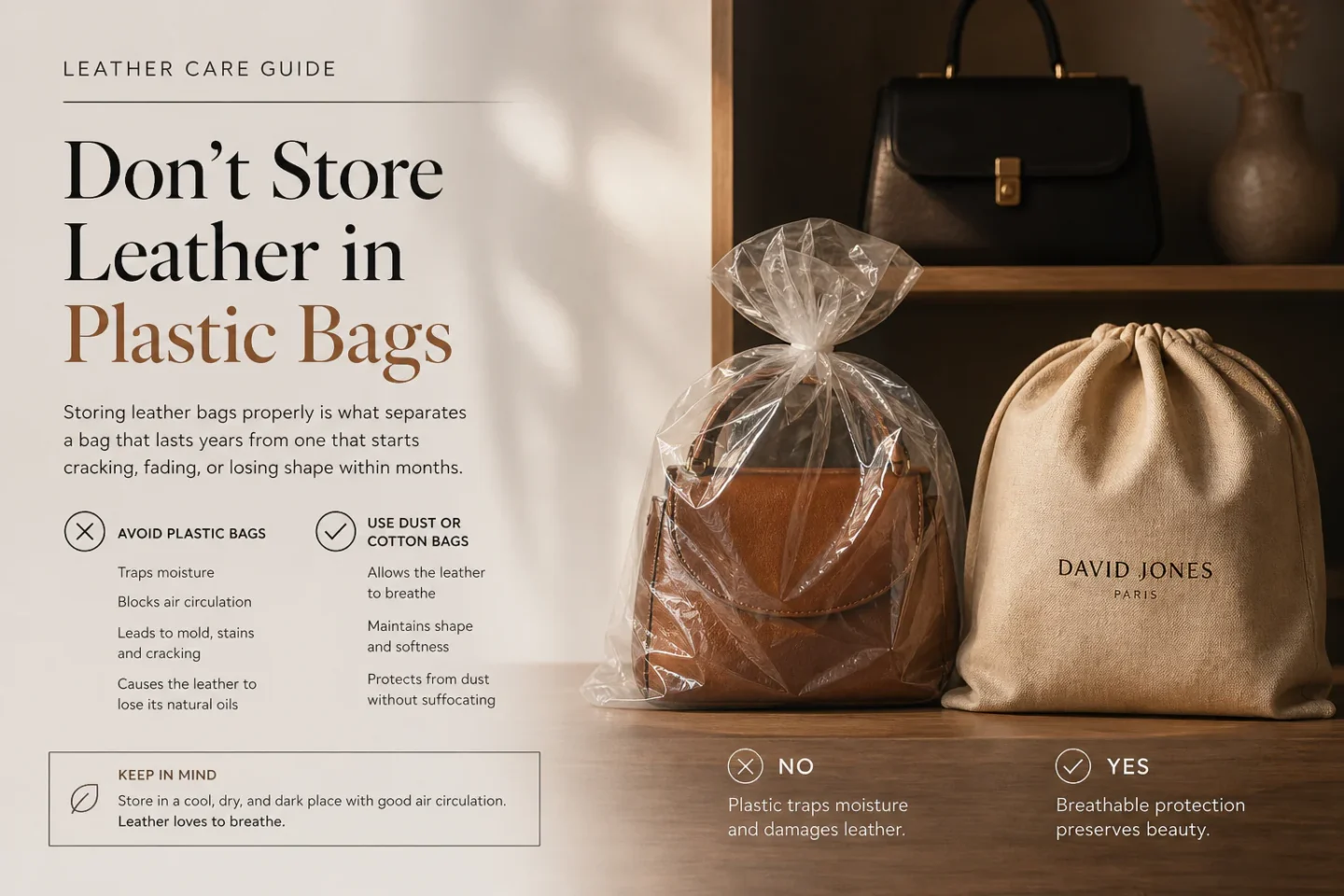
Don’t Store Leather in Plastic Bags
Storing leather bags properly is what separates a bag that lasts years from one that starts cracking, fading, or losing shape within months. Leather is sensitive to light, heat, humidity, and pressure, so the storage environment matters just as much as cleaning or conditioning. Leather needs to be stored in a medium temperature, air floating space. A dark, cool and a dry space is your friend. Anything preventing air and creating pressure helps damage leather. By that means plastic bags are a huge red flag. They suffocate all the layers of the leather and trap the moisture. Instead of using low quality plastics use a dust bag or cotton bag. They allow the air to circulate and ensure health.
Don’t Ignore Stains or Mold
Ignoring stains is not the right way to deal with dirt with leather. Especially if it’s a common kind known as mold.
Air humidity can cause white fuzzy spots known as mold. But even though these molds can make your leather bag look ruined, they can be fixed just be sure not to ignore them so they don’t grow faster. First brush away the mold with a soft leather brush. You can also use mild soap and water to sweep away all the mold. Do not use heavy detergent and do not wash the stain with heavy water, be gentle and use conditioner for a better result.
Don’t Overload or Misuse Leather Bags
Leather bags are one of the most popular leather products in the world. Leather bags can be durable, but overloading them can still cause deformation or damage over time. One of the most misconceptions is that because leather is durable it will not face any issues by overloading. Each bag is designed for a purpose, if it’s a night or evening purse it cannot be burdened with too many unnecessary daily items.
A simple leather care routine
Leather production is evolving and changing every day and yet two things remain the same. Leather is still trendy and people still care and attend to their leathers. Even though summarizing leathers is not an easy task to do, we try to keep it short. Here a simple routine for everyday use:
– Avoid the excessive sunlight and direct radiation.
– Remove sudden stains and mold with carefulness and the best natural leather protection kits
– Allow your leather jacket or bag to breathe daily out of the closet, this helps naturally float air and keep the texture fresh.
– For rainy conditions, use a waterproofing or protective product only if it is specifically suitable for the material of your bag.
– Leather is the product of nature’s consistency and therefore it rewards constant care. Small creases, softening, and a developing patina are normal and even desirable by many. Imperfection is a part of the leather production, addressing these early is easy.
And a final note being that not all leathers are equal, make sure that your routine is not just a copy and suitable based on the leather you are using.
FAQ
Regular cleaning, proper conditioning, and protecting leather from sunlight and excess moisture help maintain its quality and elegant appearance.
Direct sunlight, excess water, harsh chemicals, and improper storage are some of the biggest causes of leather damage and cracking.
Leather bags should be stored in a cool, dry place inside a dust bag or cotton bag to allow airflow and prevent mold or deformation.
-
 229.00 AEDColor#0f0f0fBlackCoconut Cream#c3c1b9Moonstruck#b7a78fOxford Tan#e0c7d7Snow Lilac
-
 187.00 AEDColor#0f0f0fBlackCoconut Cream#c3c1b9Moonstruck#e0c7d7Snow Lilac
-

-
 202.00 AEDColor#ba9f99Adobe Rose#4b596eBering sea#0f0f0fBlack#ddd0c9Warm Taupe#582b36Windsor Wine