
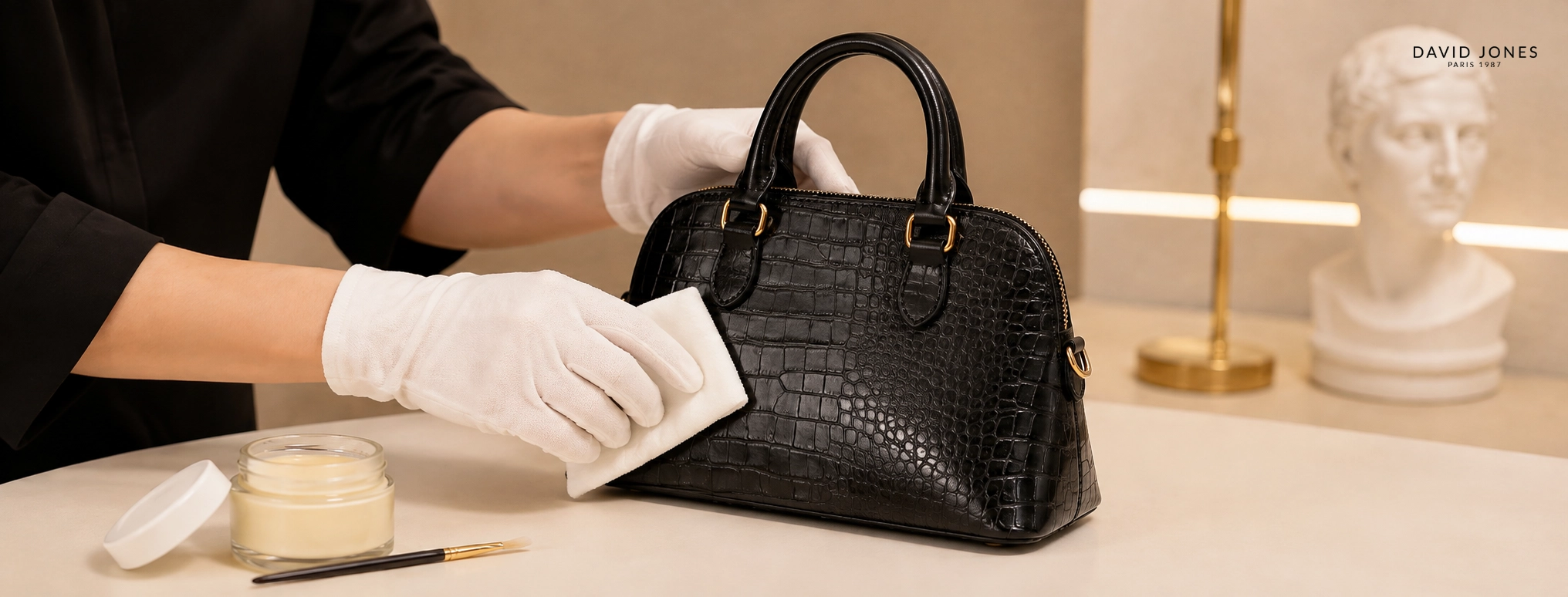
How to Remove Stains From Handbags: A Complete Cleaning Guide
A handbag is more than just an accessory. It is something you carry every day, which means it can quickly pick up makeup, food, coffee, oil, dust and other marks.
The good news is that many everyday stains can be treated at home when they are handled carefully. The important part is knowing what you are cleaning and choosing a method that will not damage the material, colour or finish.
Leather, suede, canvas, fabric and synthetic materials can react very differently to moisture and cleaning products. There is no single cleaning method that is safe for every handbag.
In this guide, we’ll explain how to deal with common handbag stains, how to clean different handbag materials, what to avoid and how to protect your handbag, especially in the UAE climate.
Before You Remove a Stain: What Should You Check?
Before reaching for a cleaning product, take a moment to prepare your handbag.
Identify the Handbag Material
The first step in handbag stain removal is identifying what your bag is made from.
Common materials include:
* Leather
* Suede
* Canvas
* Fabric
* Nylon
* Synthetic leather
* Vegan leather
A method that may be suitable for one material could damage another. For example, suede generally requires much more careful handling than a smooth, finished leather. if you need further information on this topic, check out The Ultimate Guide to Leather Care
Check the Manufacturer’s Care Information
If your handbag comes with a care label or specific cleaning recommendations, use those as your starting point. The manufacturer’s instructions take priority over general cleaning advice because materials and finishes can vary significantly between handbags.
Test Before You Clean
Before applying any cleaner, test it on a small, hidden area of the handbag.
This helps you check whether the product changes the color, texture or finish before you treat the visible stain.
Allow the test area to dry completely before deciding whether to continue.
What You Need to Clean a Stained bag
You do not need a large collection of cleaning products. In many cases, a few simple tools are enough.
Depending on the material and stain, you may need:
- A clean, soft microfiber cloth
- A clean white cloth
- A soft brush for suitable materials
- Lukewarm water, when appropriate
- A cleaner specifically designed for the handbag material
- A suede brush for suede handbags
Avoid using several products at once. More cleaning products do not necessarily mean better results and can increase the risk of damaging the handbag.
How to Remove Stains From a bag: Step by Step
If you have just noticed a stain, don’t panic, acting carefully is more important than acting aggressively.
Step 1: Remove Loose Dirt
If there is dust, dirt or another loose substance on the surface, gently remove it with a soft, dry cloth or appropriate brush.
Do not scrub the area, particularly if the material has a delicate or textured surface.
Step 2: Blot Fresh Spills
For a fresh liquid stain, gently blot the area with a clean, absorbent cloth.
The aim is to lift as much of the liquid as possible without pushing it further into the material.
Do not rub.
Rubbing can spread the stain and may damage the surface, colour or texture.
Step 3: Treat the Stain According to the Material
Once the excess stain has been removed, use only a cleaning method appropriate for that specific material.
Do not assume that a cleaner designed for leather is suitable for suede, canvas or vegan leather.
Always test the method on a hidden area first.
Step 4: Let the Handbag Dry Naturally
After cleaning, allow the handbag to air-dry naturally at room temperature.
Keep it away from hairdryers, radiators, heaters and other direct heat sources. Excessive heat can affect some materials, finishes and adhesives.
Avoid placing a damp handbag in direct sunlight to speed up the drying process.
Step 5: Check the Result Before Repeating
Once the area is completely dry, check the result.
If the stain remains, do not immediately apply more and more product. Repeated treatment can sometimes cause more damage than the original stain.
For persistent stains, delicate materials or visible changes to the surface, professional cleaning may be the safer choice.
How to Remove Different Types of Stains From Handbags
Different stains behave differently, so the treatment should be adjusted accordingly.
How to Remove Makeup Stains From a Handbag
Foundation, lipstick, concealer and other cosmetics can leave oily or pigmented marks, particularly inside the handbag or around its opening.
For a fresh makeup stain:
- Carefully lift away any excess product with a clean cloth.
- Do not rub the makeup into the material.
- For suitable smooth surfaces, lightly dampen a microfiber cloth with lukewarm water.
- If appropriate for the material, use a small amount of mild, material-specific cleaner.
- Gently dab the affected area rather than scrubbing it.
- Remove any remaining residue with a clean cloth if the material allows it.
- Let the area dry naturally.
For suede or other delicate materials, avoid using ordinary household cleaners. A suede-specific brush or specialist cleaning product may be more appropriate.
Tip: Keeping cosmetics inside a separate makeup pouch is one of the easiest ways to prevent future stains inside your handbag.
How to Remove Oil and Grease Stains From a Handbag
Oil and grease can be particularly difficult because they may penetrate porous materials.
If the stain is fresh:
- Blot the excess oil gently with a clean absorbent cloth.
- Do not rub the stain.
- Avoid adding water immediately, particularly on leather and suede.
- Do not use household degreasers or strong detergents without confirming that they are safe for the material.
On some washable fabrics, a suitable absorbent treatment may help lift surface oil, but it should always be tested first.
For leather, suede or valuable handbags, avoid experimenting with kitchen remedies or aggressive cleaning products. If the oil has penetrated the material or left a dark patch, specialist cleaning is usually the safer option
How to Remove Ink Stains From a Handbag
Ink is one of the more difficult handbag stains to treat because strong solvents can damage color, finish and texture.
If you notice an ink stain:
- Stop rubbing the area immediately.
- Blot very gently if the ink is still wet and the material allows it.
- Avoid alcohol, acetone and other strong solvents unless they are specifically approved for that material.
- Test any specialist ink or material cleaner on a hidden area first.
- If the stain is large, old or spreading, stop treating it yourself.
Ink on suede, delicate leather or a handbag with a special finish is best assessed by a professional before any aggressive treatment is attempted.
How to Remove Water Stains From a Handbag
Water marks can appear when moisture dries unevenly, particularly on leather and suede.
If your handbag gets wet:
- Gently blot away excess moisture with a clean, absorbent cloth.
- Do not rub the surface.
- Allow the handbag to dry naturally at room temperature.
- Keep it away from direct heat and strong sunlight.
- Once completely dry, follow the appropriate care routine for the material.
Do not repeatedly add water to a water stain simply because you want to make the mark disappear. On some materials, additional moisture can make the problem worse.
Suede and unfinished leather are particularly sensitive to water and may require specialist treatment.
How to Remove Food and Drink Stains From a Handbag
Coffee, tea, juice, sauces and food can leave both visible stains and unpleasant odours.
For a fresh spill:
- Remove solid food particles carefully without scraping the surface.
- Blot liquid with a clean cloth.
- Avoid rubbing the stain outward.
- For suitable materials, gently clean the affected area using a tested, material-appropriate method.
- Allow the handbag to dry naturally.
Do not soak the handbag to remove a food or drink stain. This can spread the moisture and may affect the shape, lining or finish.
If a spill contains milk, cream or another substance that may cause an odour, professional cleaning may be necessary if the smell remains after the surface has dried.
How to Remove Stains Based on Handbag Material
The material of your handbag is just as important as the type of stain.
How to Clean a Leather Handbag
Smooth finished leather can generally tolerate gentle surface cleaning better than suede or unfinished leather, but excessive moisture and unsuitable products can still damage it.
For light surface marks, you may need:
- A soft microfiber cloth
- A small amount of lukewarm water, if suitable
- A leather-specific cleaner
- A compatible leather conditioner, when recommended
A simple approach is:
- Remove surface dust with a soft cloth.
- Test your chosen cleaner on a hidden area.
- Apply a small amount to the cloth rather than directly to the handbag.
- Gently wipe the affected area.
- Remove residue if required.
- Allow the handbag to dry naturally.
- Condition the leather only if the finish and manufacturer’s recommendations allow it.
Avoid soaking leather, using harsh detergents or drying it with direct heat.
For a deeper guide to maintaining, conditioning and storing leather, read The Ultimate Guide to Leather Care.
If the leather has deep staining, color transfer, mould, cracking or damage to its finish, professional leather care is the safer option.
How to Clean a Suede Handbag
Suede is more sensitive to moisture, friction and unsuitable cleaning products than smooth finished leather.
For light surface marks, you may need:
- A clean suede brush
- A soft, dry cloth
- A suede-specific cleaning product, when appropriate
Gently brush light marks in the direction of the nap.
Avoid:
- Soaking suede in water
- Scrubbing aggressively
- Using ordinary soap
- Applying alcohol or acetone
- Using household stain removers
- Drying suede with direct heat
Oil, ink, significant water marks and deep stains should generally be handled by a professional suede cleaner.
How to Clean a Canvas Handbag
Canvas can be more forgiving than some delicate materials, but not every canvas handbag can be treated in the same way.
For suitable washable canvas, you may need:
- A soft brush
- A microfiber cloth
- Mild detergent
- A small amount of lukewarm water
First remove loose dirt. Test a diluted cleaning solution on a hidden area.
If there is no change in color or texture:
- Lightly dampen the cloth.
- Gently work on the stained area.
- Avoid saturating the fabric.
- Remove any residue with a clean, slightly damp cloth.
- Allow the handbag to air-dry naturally.
Avoid bleach and aggressive scrubbing unless the manufacturer specifically recommends them.
How to Clean a Fabric Handbag
Fabric handbags can vary significantly depending on the textile, lining, structure and decorative details.
For a suitable washable fabric:
- Remove surface dust first.
- Test a small amount of diluted mild detergent in an inconspicuous area.
- Gently dab or clean the stained section.
- Avoid excessive moisture.
- Keep water away from leather trims, glued details and sensitive hardware.
- Allow the handbag to dry naturally.
Do not assume that every fabric handbag can be placed in a washing machine. Structured handbags and those with glued or decorative components may be damaged by soaking.
How to Clean a Faux Leather or Vegan Leather Handbag
Faux leather and vegan leather can have different coatings and finishes, so they should not automatically be treated like genuine leather.
For light surface marks, you may need:
- A soft microfiber cloth
- Lukewarm water
- A small amount of mild soap, when suitable for the finish
After testing:
- Lightly dampen the cloth.
- Gently wipe the affected area.
- Avoid excessive pressure.
- Remove residue with a clean, slightly damp cloth.
- Allow the handbag to dry naturally.
Avoid:
- Acetone
- Strong alcohol-based cleaners
- Abrasive sponges
- Excessive water
- High heat
If the surface is peeling, cracking or changing colour, stop cleaning and seek specialist advice.
Quick Handbag Stain Removal Guide
| Stain | First Step | What to Avoid |
| Makeup | Remove excess Product and gentely blot | Aggressive rubbing and strong solvents |
| Oil & Grease | Blot excess oil carefully | Water, harsh degreasers and Random household cleaner |
| Ink | Stop rubbing and gently blot if appropriate | Alcohol, acetone and strong solvents |
| Water | Blot moisture and allow the handbag to air-dry | Direct heat and excessive moisture |
| Food & Drink | Remove solids and blot liquid | Scrubbing and soaking |
| Dust & Dirt | Gently wipe with a soft cloth | Abrasive materials and aggressive brushing |
Remember: The safest treatment depends on both the stain and the handbag material.
What Not to Do When Cleaning a Handbag
Sometimes knowing what not to do is just as important as knowing how to clean a handbag.
Don’t Use Harsh Household Cleaners
Bleach, strong detergents and other aggressive chemicals can affect color, coatings, finishes and fibrs.
Don’t Scrub Aggressively
Scrubbing can spread a stain and damage the surface, especially on leather and suede.
Don’t Soak Your bag
Unless the manufacturer specifically allows it, avoid saturating the handbag with water.
Don’t Use Direct Heat
Hairdryers, heaters and radiators can affect certain materials, finishes and adhesives.
Don’t Mix Cleaning Products
Combining cleaning products can create unpredictable results and increase the risk of damaging the handbag.
Don’t Experiment on Valuable or Delicate Bags
If the handbag is particularly valuable, delicate or has a difficult stain, DIY experimentation may create permanent damage. In these cases, specialist cleaning is the safer choice.
How to Protect Your Handbag From Stains
The easiest stain to remove is often the one that never happens.
A few simple habits can help keep your handbag looking its best.
Keep Makeup in a Separate Pouch
Cosmetics can leak or leave marks inside your handbag. Keeping them inside a small cosmetic pouch creates an extra layer of protection.
Keep Drinks Secure
Make sure bottles, cups and other liquids are properly closed before putting them inside your handbag.
Avoid Overfilling Your Bag
Overfilling can place unnecessary pressure on the material, handles, seams and overall shape.
Remove Surface Dirt Regularly
You don’t need to deep-clean your handbag every time you use it. Gently removing surface dust and small marks regularly can help prevent dirt from building up.
Store Your Handbag Properly
When you’re not using your handbag, keep it in a breathable dust bag where possible. Store it away from excessive heat, moisture and direct sunlight, and support its shape without overstuffing it.
How to Protect Your Handbag in the UAE Climate
The UAE climate requires extra attention when it comes to handbag storage and everyday care.
High temperatures, humidity and strong sunlight can affect different materials over time. Leather, synthetic coatings, adhesives and finishes can be particularly sensitive to prolonged heat and unsuitable storage conditions.
Protect Your Handbag From Extreme Heat
Avoid leaving your handbag inside a parked car for extended periods.
Temperatures inside a closed vehicle can become extremely high, which may affect leather finishes, synthetic materials, adhesives and the shape of structured handbags.
Whenever possible, take your handbag with you rather than leaving it in a hot car.
Limit Exposure to Direct Sunlight
Strong, prolonged sunlight can contribute to fading and may affect certain materials and finishes.
At home, avoid storing handbags directly beside a sunny window for long periods. A cool, shaded wardrobe or cupboard is generally a better location.
Be Careful With Humidity
Humidity can create problems when moisture becomes trapped during storage, particularly if the handbag is stored in a closed space without adequate airflow.
If your handbag becomes damp from humidity or condensation, allow it to air out naturally in a cool indoor environment before storing it.
Never seal a damp handbag inside a plastic bag, as trapped moisture can contribute to unpleasant odours and other moisture-related problems.
Store Your Handbag Correctly
For longer-term storage:
- Empty the handbag completely.
- Remove unnecessary weight from the handles and interior.
- Keep the shape with clean, suitable stuffing if needed.
- Store it in a breathable dust bag.
- Keep it in a cool, shaded and dry area.
- Avoid stacking heavy items on top of it.
- Keep it away from direct sunlight and heat sources.
- Give stored handbags occasional airflow.
For leather handbags, proper storage is particularly important. You can find more detailed leather maintenance and storage advice in The Ultimate Guide to Leather Care.
When Should You Take Your bag to a Professional
Not every stain is suitable for DIY cleaning.
Consider professional cleaning when:
- The stain is large or deeply absorbed.
- The handbag is made from delicate leather or suede.
- The stain involves ink or dye transfer.
- The colour or finish has started changing.
- The material is peeling, cracking or becoming distorted.
- There is mould or a persistent odour.
- The handbag has valuable embellishments or delicate hardware.
- You have already tried cleaning it and the condition is getting worse.
- The handbag is particularly valuable or difficult to replace.
When in doubt, protecting the handbag is more important than trying several cleaning methods in an attempt to remove a stubborn stain.
Final Thoughts
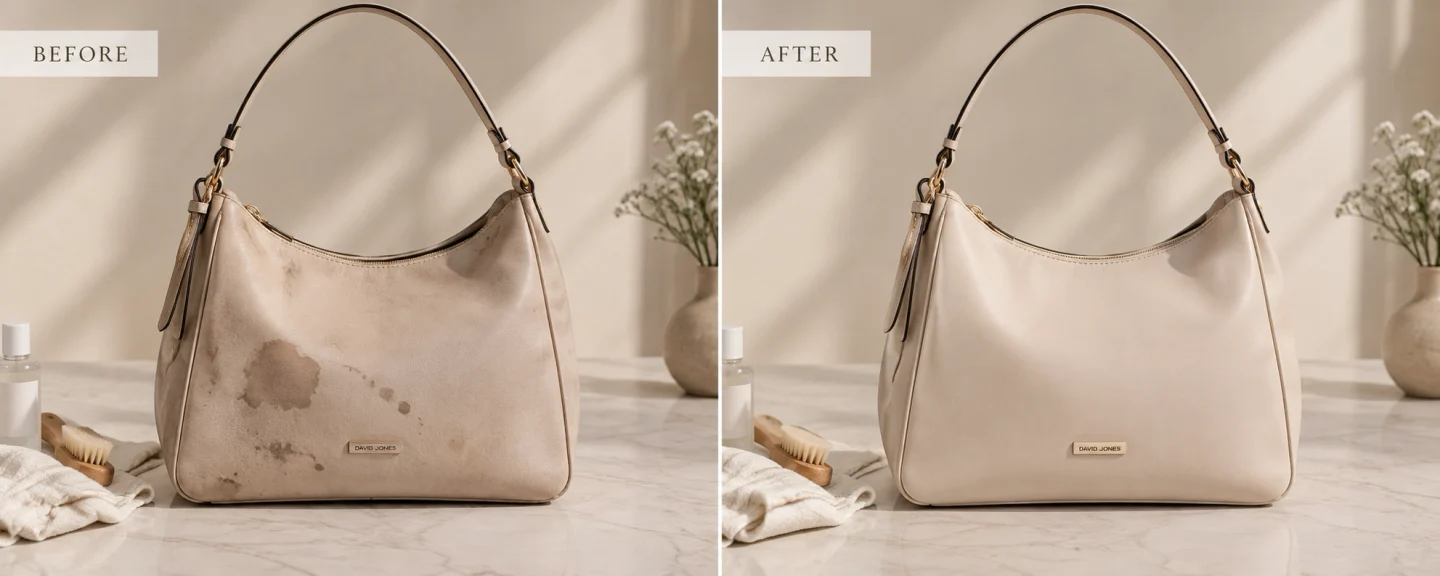
Knowing how to remove stains from handbags is less about finding one universal cleaning trick and more about understanding the material, identifying the type of stain and treating it carefully.
The golden rules are simple:
- Always test a cleaning method on a hidden area first.
- Choose the cleaning method according to the material and stain.
- Blot instead of rubbing.
- Avoid harsh chemicals and excessive moisture.
- Keep leather and suede away from direct heat.
- Let your handbag dry naturally.
- Store it away from heat, humidity and direct sunlight.
- When a stain is stubborn or the material is delicate, seek professional help.
With the right care and storage, your handbag can stay beautiful and functional for much longer.
Looking for a new handbag to add to your wardrobe? Explore the Women’s Handbags collection at David Jones UAE and discover styles for everyday life and special occasions.
Frequently Asked Questions
It depends on the handbag’s material and care instructions. Some materials can tolerate limited moisture, while others can be damaged by water. Always check the manufacturer’s recommendations first.
Remove any excess makeup without rubbing it further into the material, then gently blot the area if appropriate for the material. Use a suitable cleaner only if the care instructions allow it.
Oil stains can be difficult to treat because they may penetrate leather. Avoid experimenting with household products and follow the manufacturer’s leather-care instructions. For stubborn stains, professional cleaning may be the safest option.